Behavior
Lionesses generally remain in their prides for life, raising cubs communally, whereas male lions leave as subadults, roaming independently or forming all-male coalitions to increase reproductive success.
A male belonging to a pride must guard its territory and defend against other males who seek to join or take over.
Lions are highly territorial and occupy the same area for generations. Females actively defend their territories against other females, while resident males protect prides from rival coalitions. Territory size depends on prey abundance, as well as access to water and denning sites.
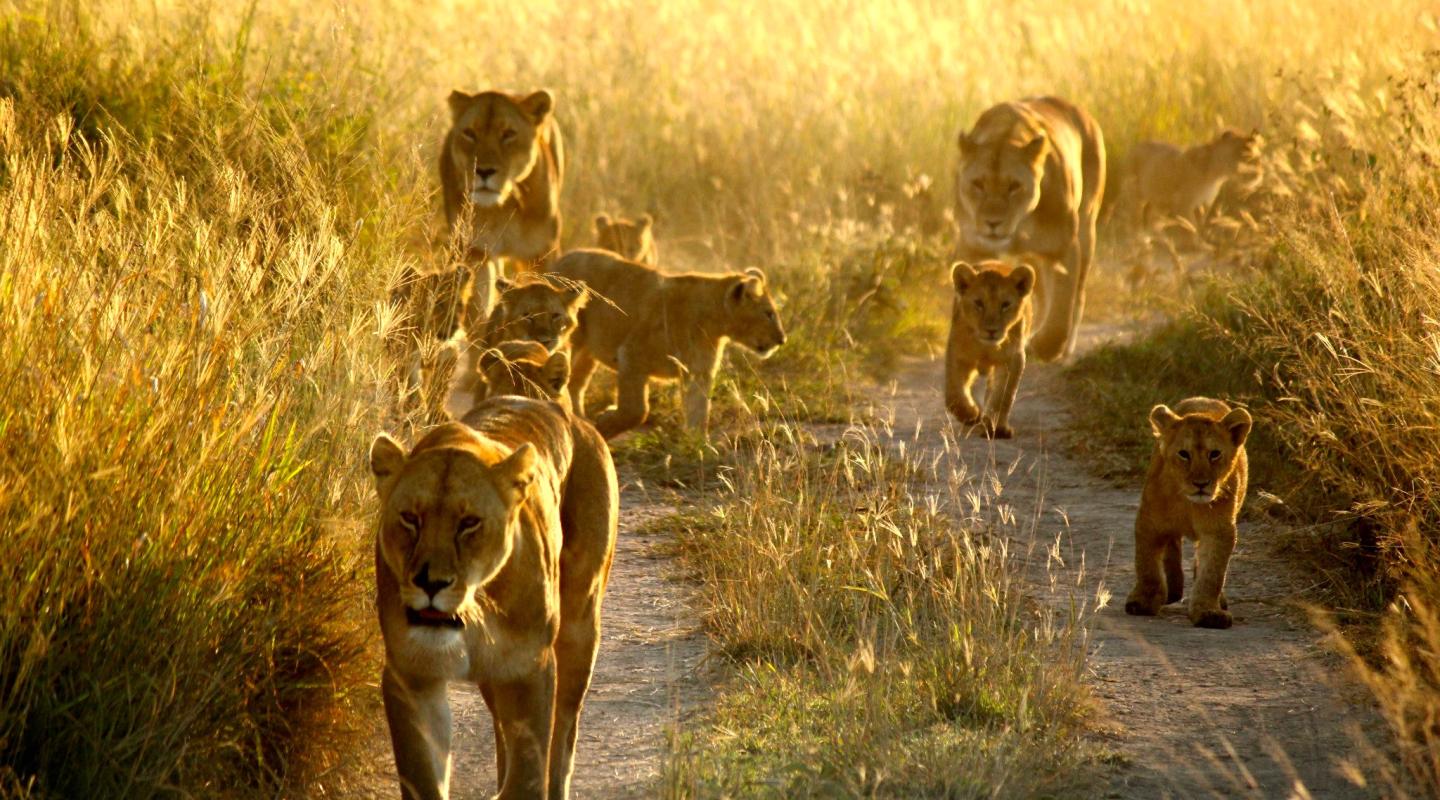
A typical pride of lions consists of about six related females, their dependent offspring, and a “coalition” of 2–3 resident males that joined the pride from elsewhere. The pride is a “fission-fusion” society and pridemates are seldom found together, except for mothers that have pooled their offspring into a “crèche.”
Most daughters are recruited into their mothers’ pride although about a third disperse to form new prides; pride size ranges from 1–21 females, and mid-sized prides enjoy the highest reproductive rates, and females in the same pride breed at similar rates. Young males always leave home in search of unrelated mates. Coalition size varies from 1–10 males, and coalitions of 4–10 males consist entirely of males born in the same pride, whereas pairs and trios often include unrelated individuals. Although larger male coalitions enjoy higher per capita reproductive success, reproduction is only equally shared in small coalitions.
Lions are most affectionate to their like-sexed companions. Females spend their lives in their mothers’ pride or with their sisters in a new pride; males may only spend a few years in a given pride but remain with their coalition partners throughout their lives. Read more about group living.